Macarena Gomez-Barris: Oceanic Landscapes and the Politics of Movement
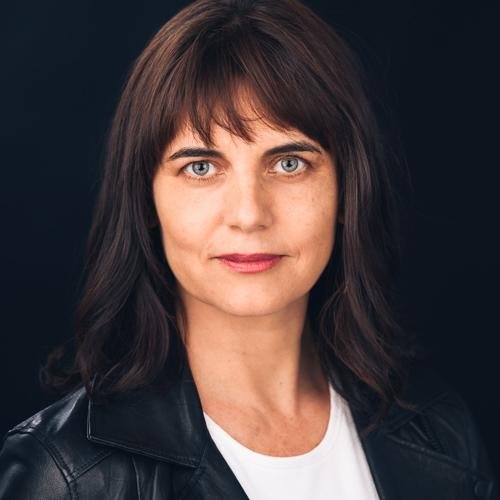
Conversation with Macarena Gómez-Barris, writer and scholar with a focus on decolonial environmental humanities, extractivism, media environments, cultural theory and artistic practice.
Macarena Gómez-Barris is the author of The Extractive Zone: Social Ecologies and Decolonial Perspectives (Duke University Press, 2017), which examines five scenes of ruinous extractive capitalism. Beyond the Pink Tide: Art and Political Undercurrents in the Américas (UC Press, 2018) is a text of critical hope about the role of submerged art and solidarities in troubled times. She is also the author of Where Memory Dwells: Culture and State Violence in Chile (2009) and co-editor with Herman Gray of Toward a Sociology of the Trace (2010). She is series editor with Diana Taylor of Dissident Acts at Duke University Press. Her forthcoming book, At the Sea’s Edge (Duke University Press), considers colonial oceanic transits and the generative space between land and sea.
She is also part of the Social Text Collective, and her work includes dozens of essays and curatorial events. She is the founder and director of the Elemental Media Lab, hosted by the Department of Modern Culture and Media, and the inaugural director of the Center for Environmental Humanities at Brown (CEHAB).
Oceanic Imaginaries
Your previous and upcoming work considers the sea’s edge not only as a site where land meets water, but how that landscape itself can be grounded within its histories.
Could you expand on how these oceanic imaginaries might open new ways of sensing colonial afterlives, and how they might resonate within artistic practice?
I would start by saying that I think of myself as a creative thinker and a scholar. I would be remiss not to name a huge body of work within Africana studies, Indigenous studies, global studies and Mediterranean studies that informs my work. There are also beautiful novels, poetry, films and artistic practices that bring forward my relation to and autobiographical experience with the ocean, and what I’m referring to as relational engagement and situated embodiment at the sea’s edge.
To think within the history of colonialism and its effects, is to invoke the Middle Passage, and to think with Black thinkers about the oceanic archival space that is the Atlantic. It is a space of mourning that highlights racial capitalism, and a place of reckoning with the violence done to the enslaved. So I’d have to start there in order to discuss my own ways of thinking about the sea’s edges.
The sea’s edge itself, for me, is this beautiful space as well as one of terror. My first crossing of the Pacific took place as an act of political exile, when I was a toddler in my mother’s lap. I am currently working within what I’d like to call the decolonial environmental humanities to think from environmental points of view. I’m also considering what it means to think about the deep geologies of a place like the sea’s edge, which is not exactly solid land, but not exactly liquid ocean either.
What does it mean to think from the continental edge, and from the deep history of the places where colonists first arrived in these territories? For me, it seems to be a very rich place of memory. It’s a chronicle and an exercise in memory, but it’s also important to consider the more-than-human.
So when I began this work, I connected it to my own relation to seas and oceans, and my own story with water. The story I tell is one that’s very specific to me, but it can also be a larger story that invokes people’s memories of their own bodies of water and their histories with them.
That is how I came to this project, as an autobiographical project rooted in memory, but also in these deep intellectual histories that are both environmental and genocidal. Each place has these deep histories of trade, enslavement, or war and empire. This is also because the body of water I am most focused on in this forthcoming book is the Pacific. I come at it from this understanding, not only of the environment, but also of the land itself having memory, the water itself having memory, and what it means to work and think within that tidalectic space.
On the submerged
I love the way you ground this thinking in the landscape of the shore. In many ways, it is a land without borders, and the ocean a space that is of open access. There is a freedom associated with water, yet, when we consider transatlantic history, it also holds histories of imprisonment. Applying the multifaceted histories of water and the ocean to art history seems to offer endless possibilities for discussion.
What role do you feel art can play in making visible what is often hidden within extraction - whether slow or concealed forms of violence, but also everyday forms of resilience? I think, for example, of Gaza and the extreme tensions present at that sea. Do you feel that art or artists have a responsibility to address this?
Yes, and I love how you’ve positioned the series as well, because I do think that it is a collective and networked project between artists, visual thinkers, writers, scholars, makers and activists. It’s all of us thinking within what is increasingly being taken away from us: the commons. And not necessarily only as a space of land, but as an intellectual commons, as a public sphere where we’re able to dialogue and engage with these ideas, and really work with each other to potentially create different imaginaries.
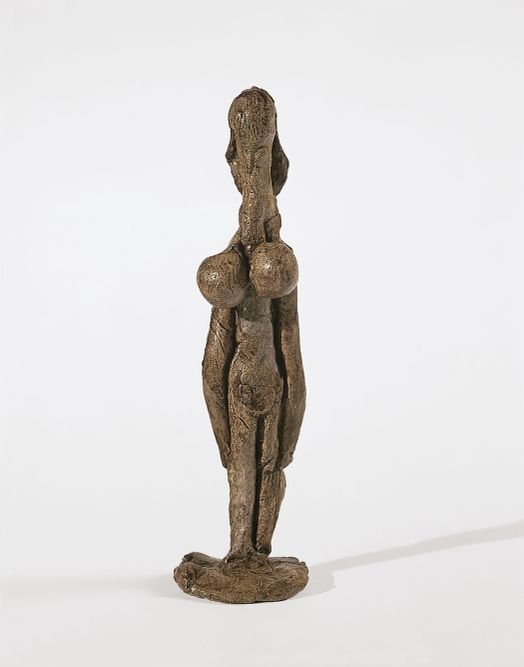
Pablo Picasso, Standing Woman, 1947. Museo Picasso Málaga
You’re right that those undercurrents, or that what is submerged, are often hidden or opaque to hegemonic views. What is hidden is precisely this way of working - a methodology, a way of being, a way of living, a space not necessarily of utopia, but one where things get worked out in dialogue, in relation and in responsibility, and with a sense of the deep histories of people belonging to particular lands and honouring that.
When you say that about Gaza, it is true. In front of our eyes is this veracity of imperialism, this veracity of colonialism: to decimate, to create war, to create environmental destruction, to decimate the water table and to decimate the history of resistance in that space. All of that is submerged, and there is a way in which art is really a way of working. It's art that is not necessarily like a product today.
I happened to visit the Picasso Museum here in Málaga, where I saw all kinds of sculptures and art. But those objects are the result of many deep histories, right? One thing that was refreshing about the narrative of this particular museum was that, while it told a story about Western art, it also brought to the surface what had previously been hidden, the ways in which Picasso appropriated African sculpture.
So, if we foreground those histories, we understand that it is, in fact, the Global South - the marginalised, the immigrant, the Palestinian and the trans person - who have historically informed this creative way of working in the world, which results in sculpture and other forms of artistic practice.
That is the undercurrent that I'm after. The kind of artful practice of everyday life, or this way of artfully working in the world that is not just something to be hung in a museum, but a way of working with each other that actually can overcome this dramatic turn to fascism and authoritarianism. That vertical definition of art is what I'm interested in dissolving and dismantling as part of this undercurrent.
Have you encountered artistic practices that you feel can help us hold and transmit epistemologies rooted in myth, native lands and rituals, particularly those of Indigenous, Afro-diasporic and Caribbean communities? How might this apply to Latin America as well? Is there a way for these non-Western artists and their practices to be encountered without being othered or confined to mythical histories that neglect contemporary conversations and thought?
Yes, I love how you’re framing that because, to me, this is really the answer and the antidote to what we’re experiencing today: heterogeneity, technological hybridity, complexity and the submerged undercurrents that I was speaking about. What you’re describing is decolonial knowledge, and these practices are the enemy of monoculture.
In our present moment in the US, for instance, and in the UK, we are seeing this reinsertion of binaries. Something is either male or female, good or bad, Christian or not, criminal or subversive - and often treated as the work of an enemy of the state. It's, again, the good versus this kind of criminalisation of more and more people. Something is either native or foreign - and native not in an Indigenous sense, but in the sense of the white settler. I would turn that on its head and say: well, the enemy is actually monoculture. It is the idea that there is one response, one approach, one master race or one master gender.
This monocultural thinking creates all kinds of colonial binaries and divisions that are useful within that framework. And that framework leaves out everything on the periphery, everything in the currents, everything in the kind of broader universe - the pluriverse.
That pluriversal approach allows this to be a storied land: a land to which many have contributed. It also allows for an archaeological approach that is not like monocultural archaeology, in which the object is under the ground but the object has a life too. The object has a story.
If we begin to layer these things - and that is not easy to do in the world we’re living in - because algorithms demand a particular kind of response or answer, reminding us there's binary logics everywhere. That reproduction of binary logic is precisely what we can turn on its head.
The way you ask the question does just that. It asks for specificity and plurality. It allows for open edges and room for certainty and uncertainty. It allows for counter-hegemony. All of these ways of thinking foment and work against the colonial divide - a divide that is very clearly about its object and subject.
That brings to mind how much information objects themselves can hold, especially within art history, and the truths they can contain through their histories. The most immediate example is your experience at the Picasso Museum: the fact that Picasso’s seemingly ‘modern’ practice can be traced back to African sculpture. Objects offer so much intel through their appearance and materiality. The same thing goes for landscape, and how in the fabric of these landscapes, we are consistently reminded of the histories, whether they be violent or not.
I think what you’re pointing to also reminds me of the frame that is put in place: not only one of monoculture, but also of racial capitalism. The way racial capitalism operates is precisely by producing that binary of consumers and producers in the Global South, Global North, etc.
In relation to art, I think the appropriative gesture is always part of this. When you mentioned fabric, I also thought about fabrics themselves: fabrics dyed with vegetable dyes, for example, and how they become part of the land and have to be buried in it. There are generations and generations of knowledge within any one of these Indigenous fabrics, yet a high-end design company can take and appropriate that fabric in a second.
I think another answer to your previous question is about timescapes, and how capitalism not only appropriates but also condenses time and the deep learning that comes from generations of knowledge production. It compresses this knowledge, allowing it to be thingified within our system of understanding and then commodified. That is something we really have to struggle against, and it is so difficult.
We are talking across geographies using this technology and, with it, exercising our capacity to organise and think together. At the same time, it is part of that same compression of time. I think we always have to ask: What is the backstory to this? What is the extractive project? What’s the blood - not the computer - that needs to be surfaced at this moment?
That brings to mind the pace of the world we are living in, and how slow practices—for example, Indigenous textile-weaving practices—are so easily diminished or even rejected because they do not operate at the pace to which we have become accustomed: things being incredibly convenient, incredibly fast-paced and serving the algorithm, as you said. I think that is why looking back to these slow practices of innate human knowledge can offer ample information to help us navigate the future, particularly when we are living through such demanding, trying and almost hopeless times in terms of what is being offered to us economically and politically. Bringing this up is crucial.
I agree with you that we are living in hopeless times. If we look at the bigger picture, we’re in the matrix: the colonial matrix of power, a digital matrix of power. There are so many losses and disappearances, so many extinctions, so many lost worlds. We have to mourn—to return to where you started. We have to mourn these lost worlds. Yet the work of recuperation, repair, resurgence, that’s very valuable work and it's on an individual scale. For example, you are an individual body doing that kind of work of archiving and exploring how to put things together, how to remember and how to think about that.
That work connects to these collective histories. We know that hundreds, and even thousands by now, of family lineages have been eradicated in Palestine. And that is the point, right? That is the point: the genocide, or the terricide that happens in biodiverse spaces such as Yasuní or the Amazon, and the ways in which that biodiversity has been so greatly diminished.
But then we try to make meaning from that. It is not simply a practice of rescue. To me, there is a spiritual element to it, and an ethical responsibility to track those lost worlds, not to feel broken by the machine itself, and to allow our embodied practices to connect with these ancestral practices, whether they come from my own heritage or not. It is bigger than that. To me, that is the work of memory in this moment.
You answered my final question in what you just said. I was going to ask: What useful lines of flight do you imagine could reshape how art is made, shared and valued today? I think mourning, remembering, accountability and honesty are things we are not offered when we look at the bigger picture. And, not to answer the question for you, but based on what you’ve said, the practice of remembering and admitting these histories is radical. It is not the position we are meant to take, or one that will necessarily serve us in the Western world or the world at large.
I taught this course called In the Dissolution of the Summer, which was about climate change, decolonisation and global Blackness. It centred on Indigeneity, but also on ancestral practices.
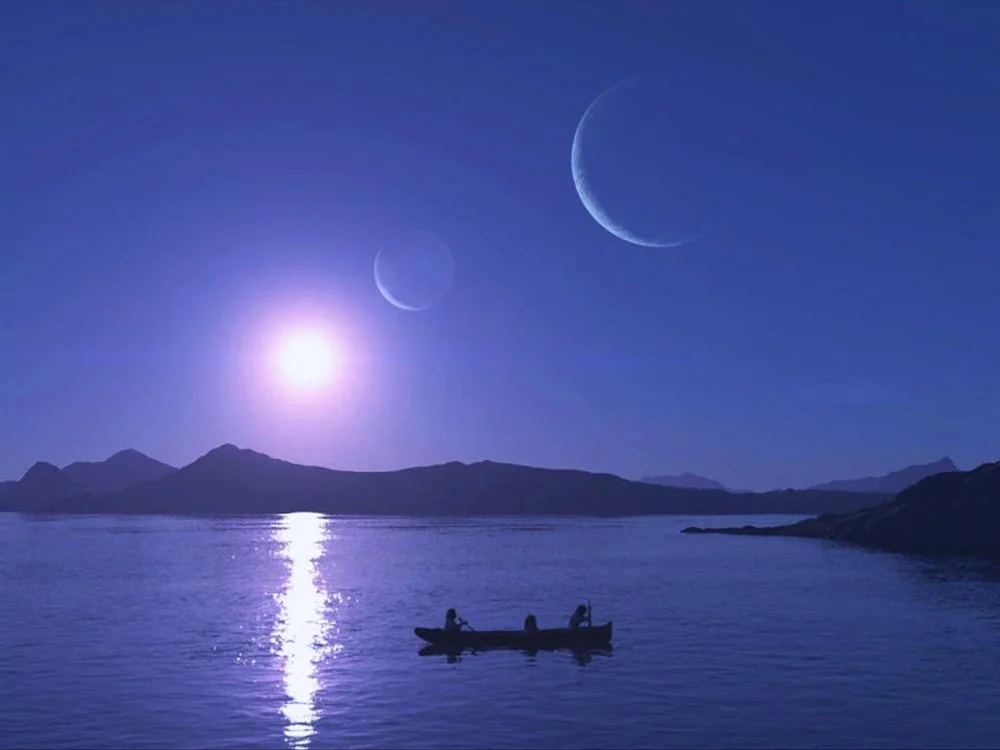
The Pearl Button (El botón de nácar), dir. Patricio Guzmán, film still.
I think your generation, as well as the generations immediately before and after yours, is experiencing this moment of incredible destruction. Perhaps the entire thing needs to come down in order to create again. But we also know that we don’t have much time. The temporalities are screwy, and there are very uneven ways in which we can see utter decimation in parts of the world, such as Congo, potentially Venezuela, and Iraq. We can also see the ways in which Latin America has been ecologically devastated by the deep and acute intensification of extractivism.
One of the things I want to say is that, even if all these liberal institutions disappear—even if we are at the end of liberalism and the end of humanism—that was and is a Western experiment. We know those institutions are saturated with bereavement loss in colonial violence. Yet, even if all of that dissolves, we still have the work that you’re doing: the methodological work, this kind of effort. And it is generational; it can’t be erased. The Palestinian struggle cannot be erased. More of us are aware now and have witnessed this history of erasure, and that is going to live on.
I have no idea what that is going to take or what it means. But, to me, it is within those individual practices and forms of consciousness that there is an opportunity for something else, and that is enough for me right now. Do you know what I mean?
I know exactly what you mean. It is about sitting with that, in this moment of so much uncertainty and so much that remains unknown, while knowing that there will be some form of an after to all of this - and that knowledge is a form of hope in and of itself.
Yes, it is that ebb and flow. I don’t think of it as hierarchical; I think of it as relational. It means working from a place that is a little more heart-centred and using that knowledge for the collective, rather than for individual gain. If we kind of keep that front and centre, I feel better anyway about now.