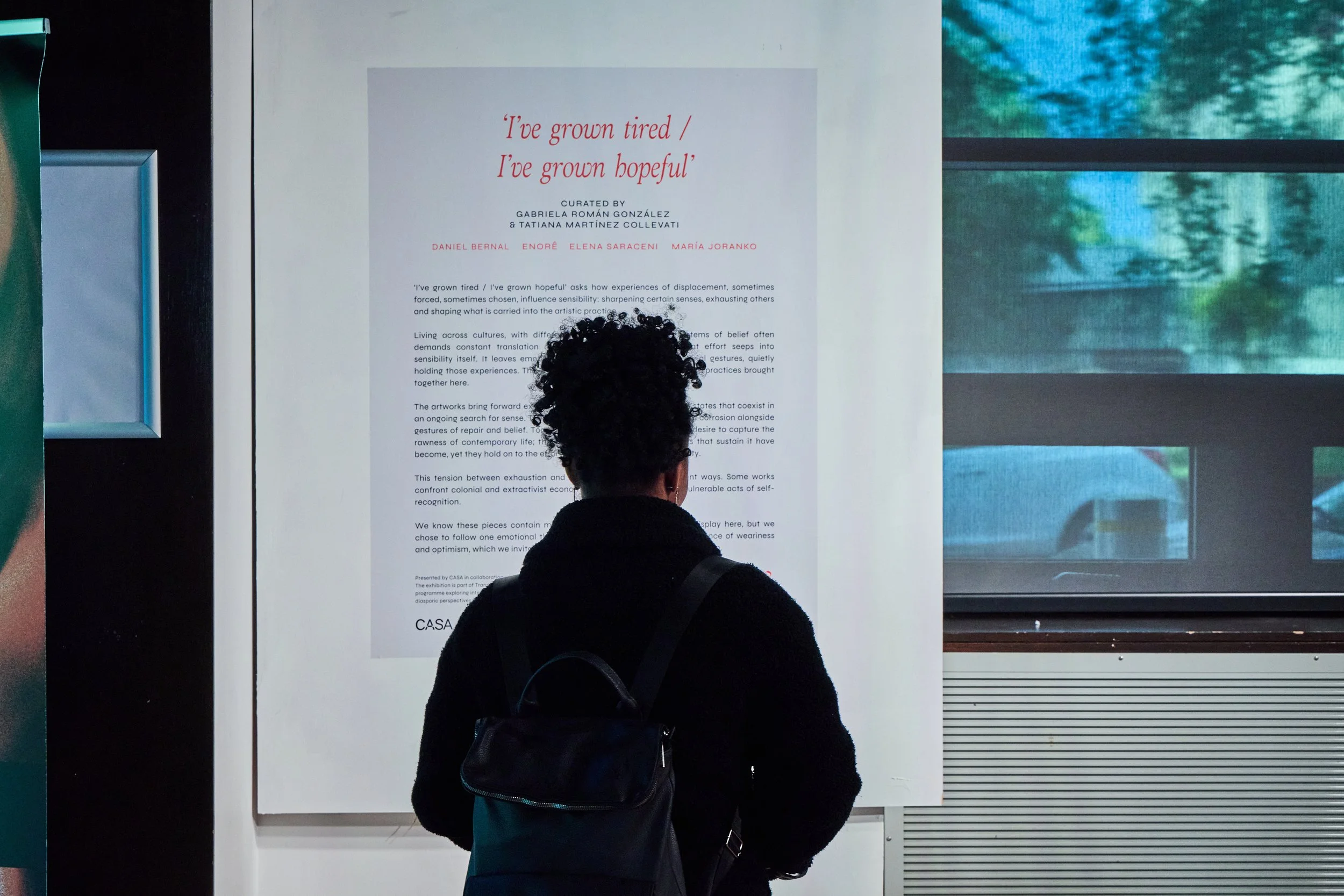
I’ve grown tired / I’ve grown hopeful
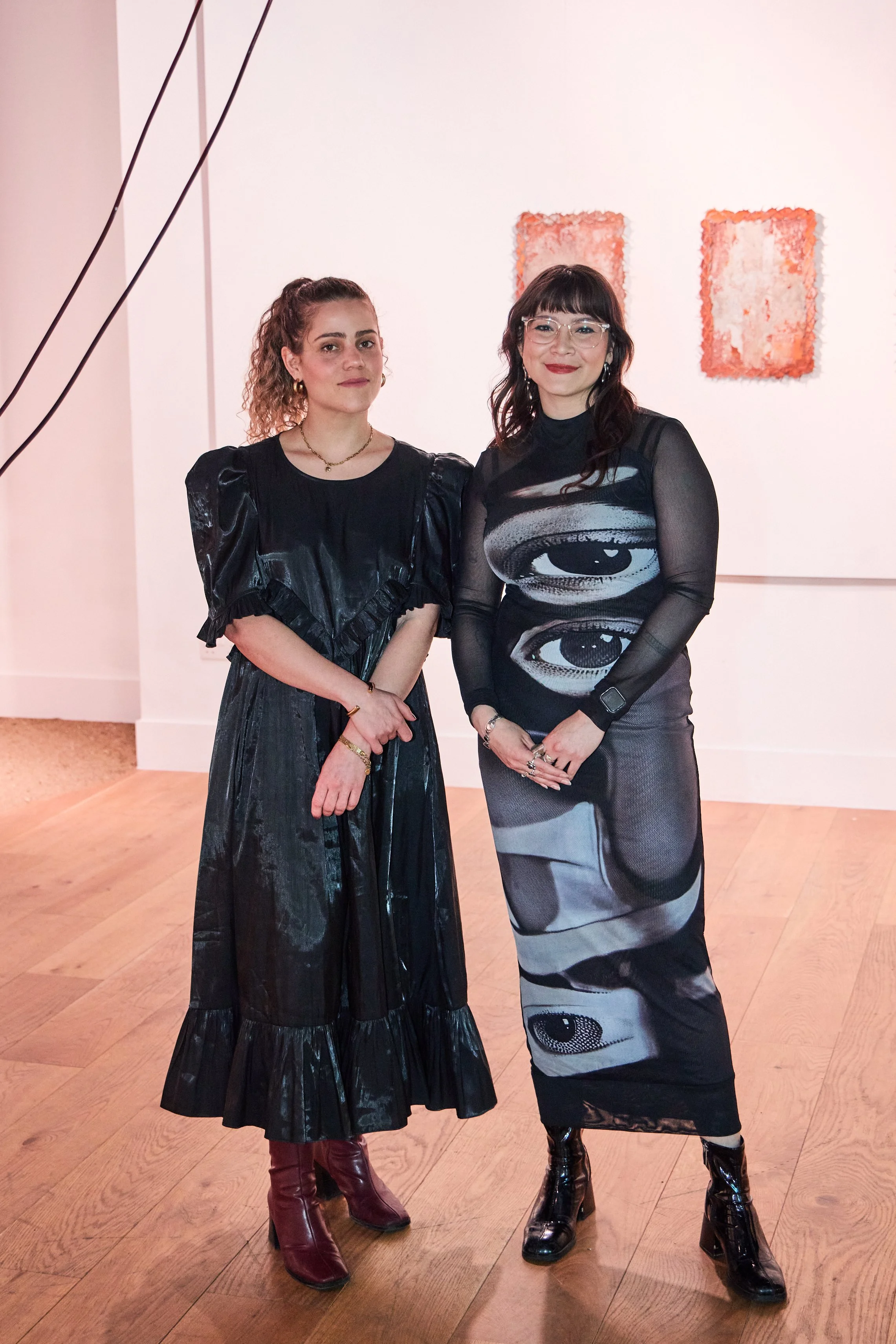
Curated by Gabriela Román González and Tatiana Martínez Collevati
With works by Daniel Bernal, enorê, Elena Saraceni and María Joranko
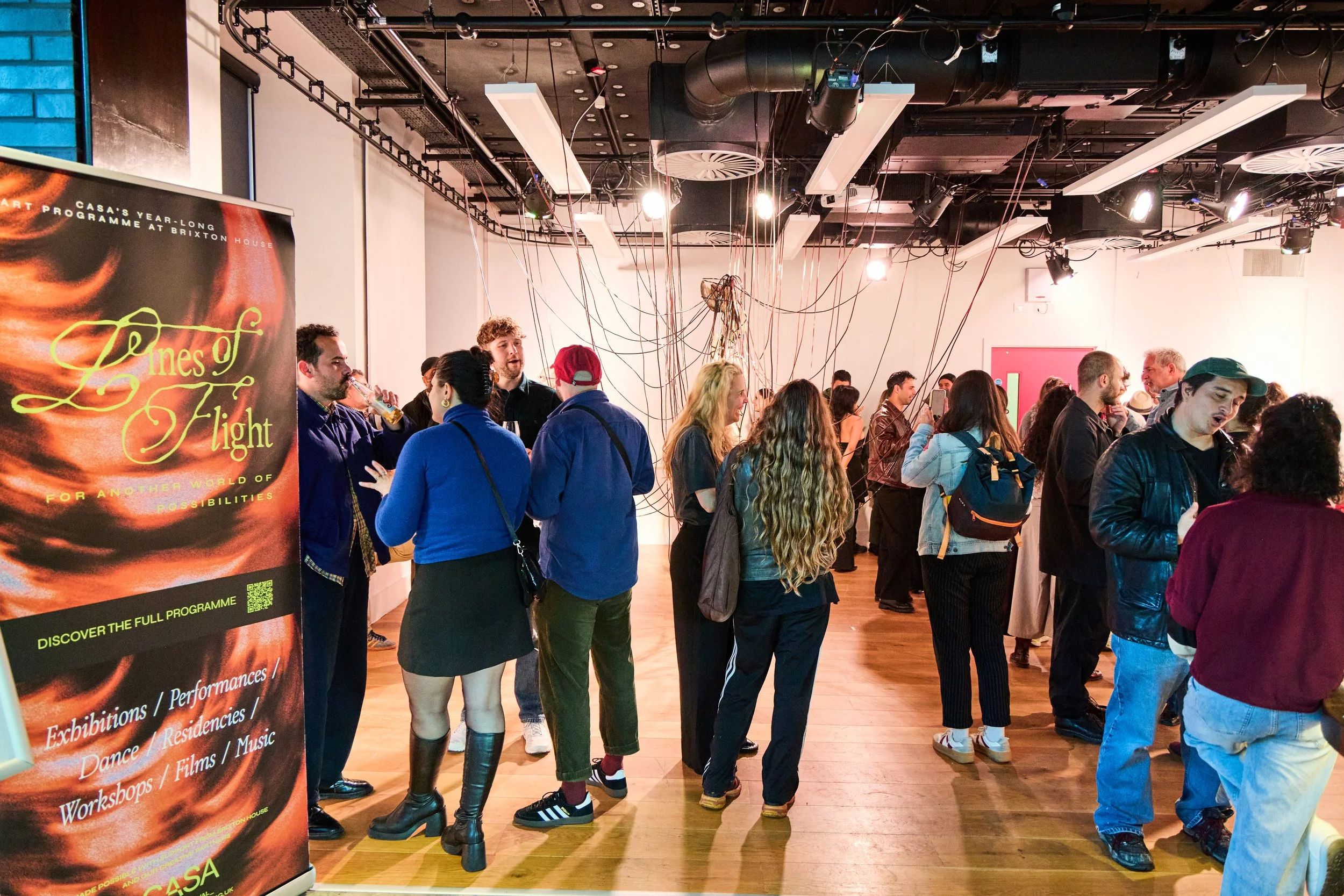
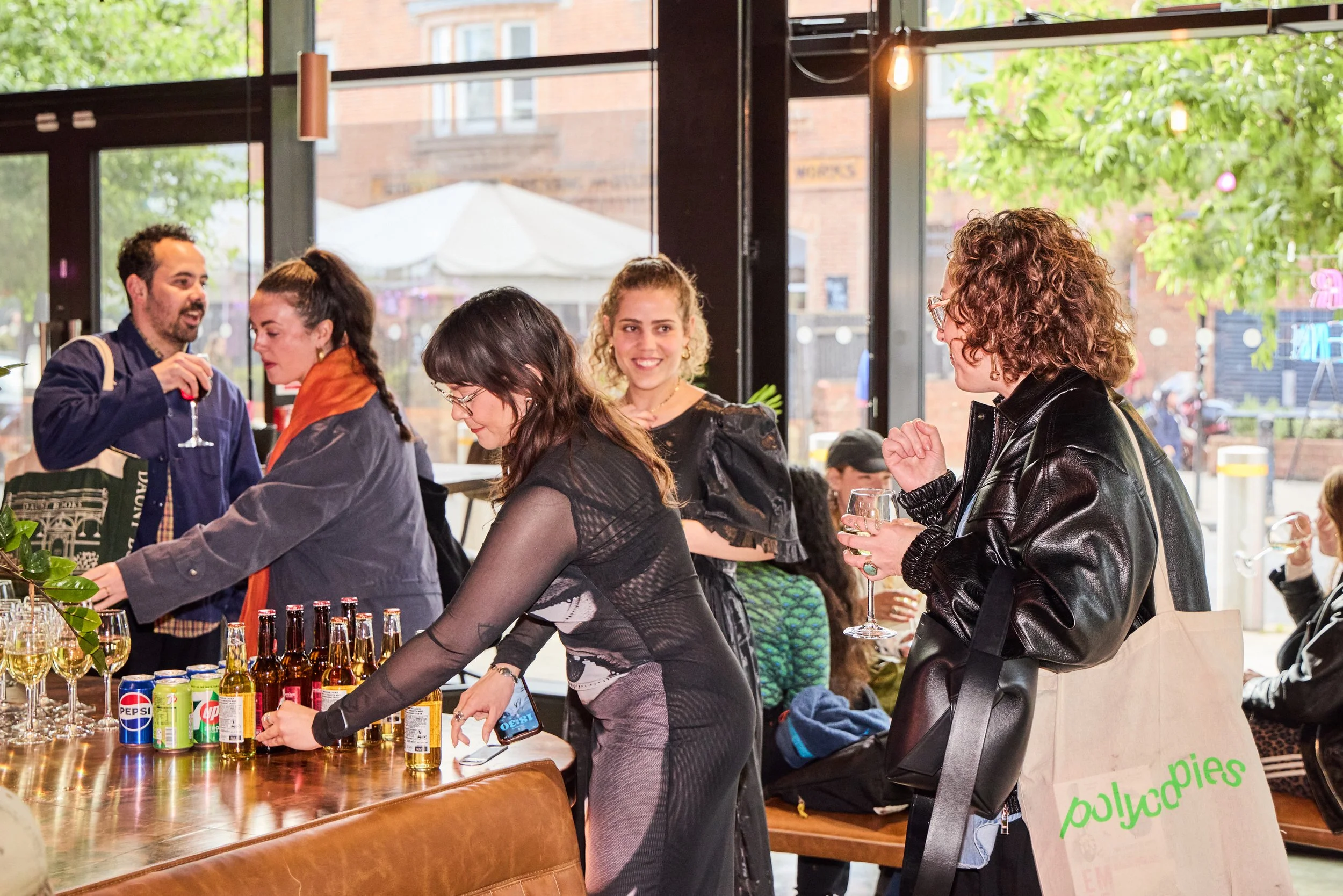
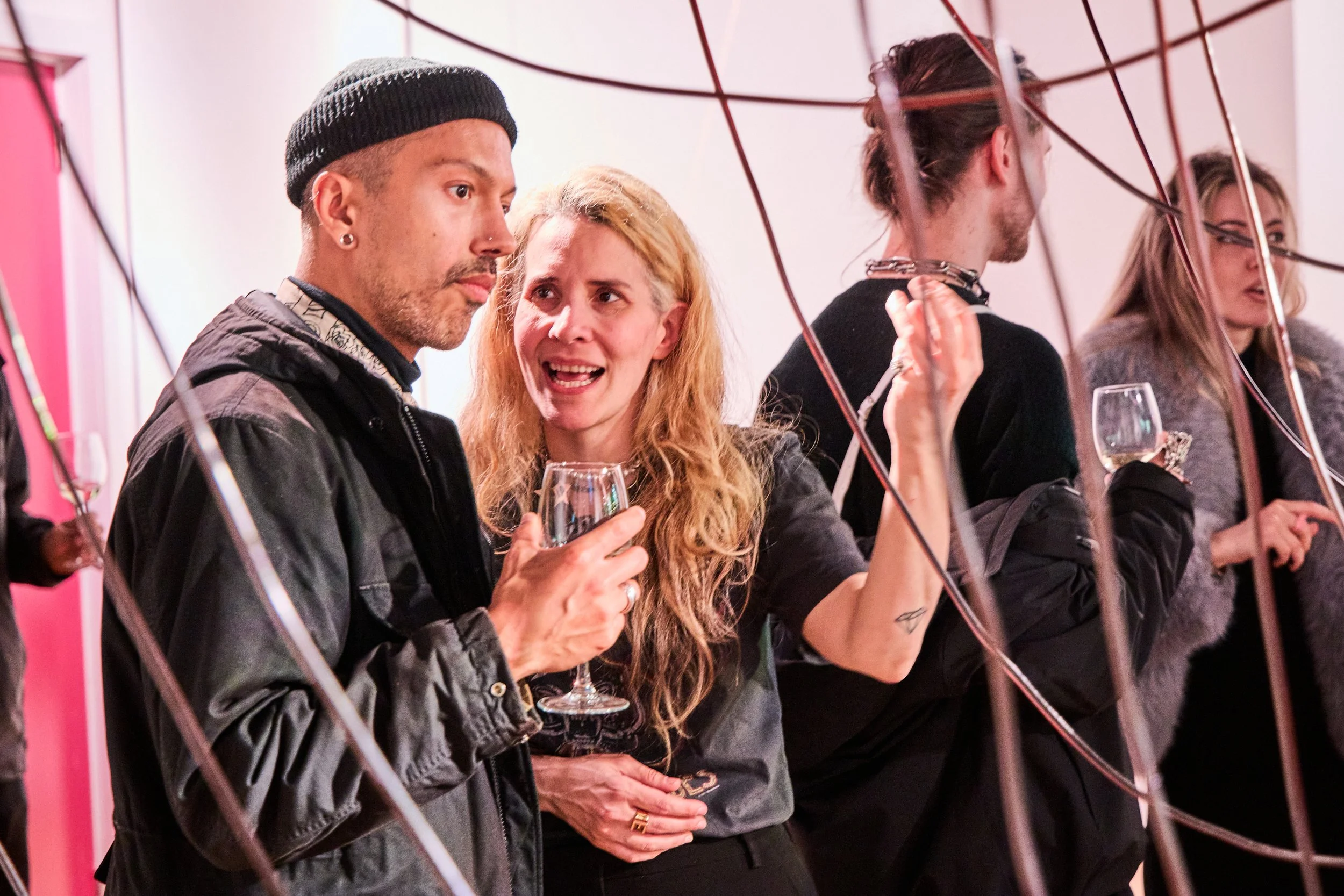
Presented by Not The Owners and CASA at Brixton House, as part of Transnational Encounters, the May chapter of Lines of Flight, CASA’s year-round multi-arts programme.
13 - 22 May 2026
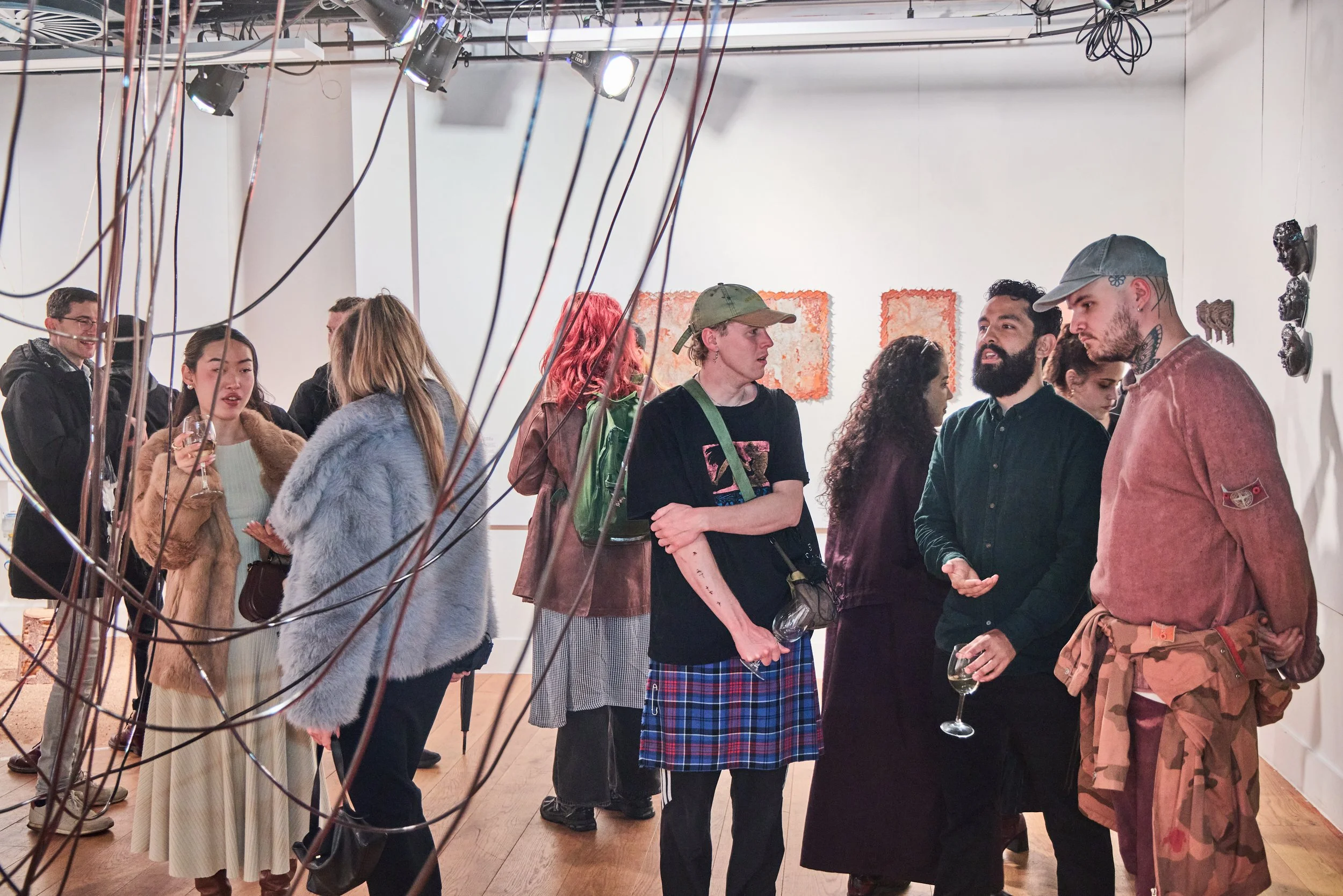
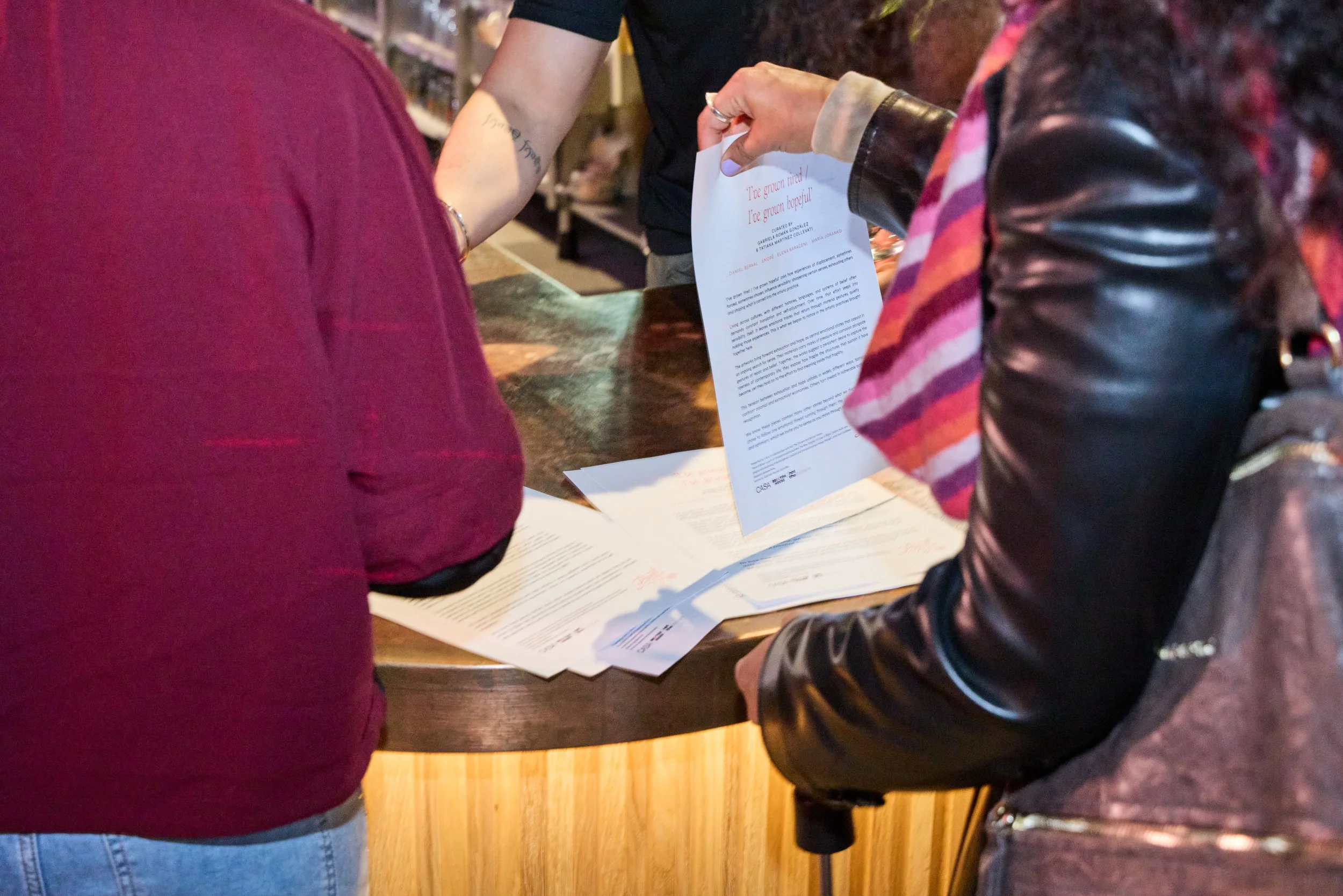
I’ve grown tired / I’ve grown hopeful asks how experiences of displacement, sometimes forced, sometimes chosen, influence sensibility: sharpening certain senses, exhausting others and shaping what is carried into artistic practice.
Living across cultures, with different histories, languages and systems of belief, often demands constant translation and self-adjustment. Over time, that effort seeps into sensibility itself. It leaves emotional traces that return through material gestures, quietly holding those experiences. This is what we began to notice in the artistic practices brought together in the exhibition.
The artworks bring forward exhaustion and hope as emotional states that coexist in an ongoing search for sense. Their materials carry marks of pressure and corrosion alongside gestures of repair and belief. Together, the works suggest a persistent desire to capture the rawness of contemporary life. They expose how fragile the structures that sustain it have become, yet hold on to the effort to find meaning inside that fragility.
This tension between exhaustion and hope unfolds in widely different ways. Some works confront colonial and extractivist economies, while others turn inward through vulnerable acts of self-recognition.
These works contain many other stories, but the exhibition chose to follow one emotional thread running through them: the coexistence of weariness and optimism
Writing & reviews
Rialta Magazine | Noctis Magazine
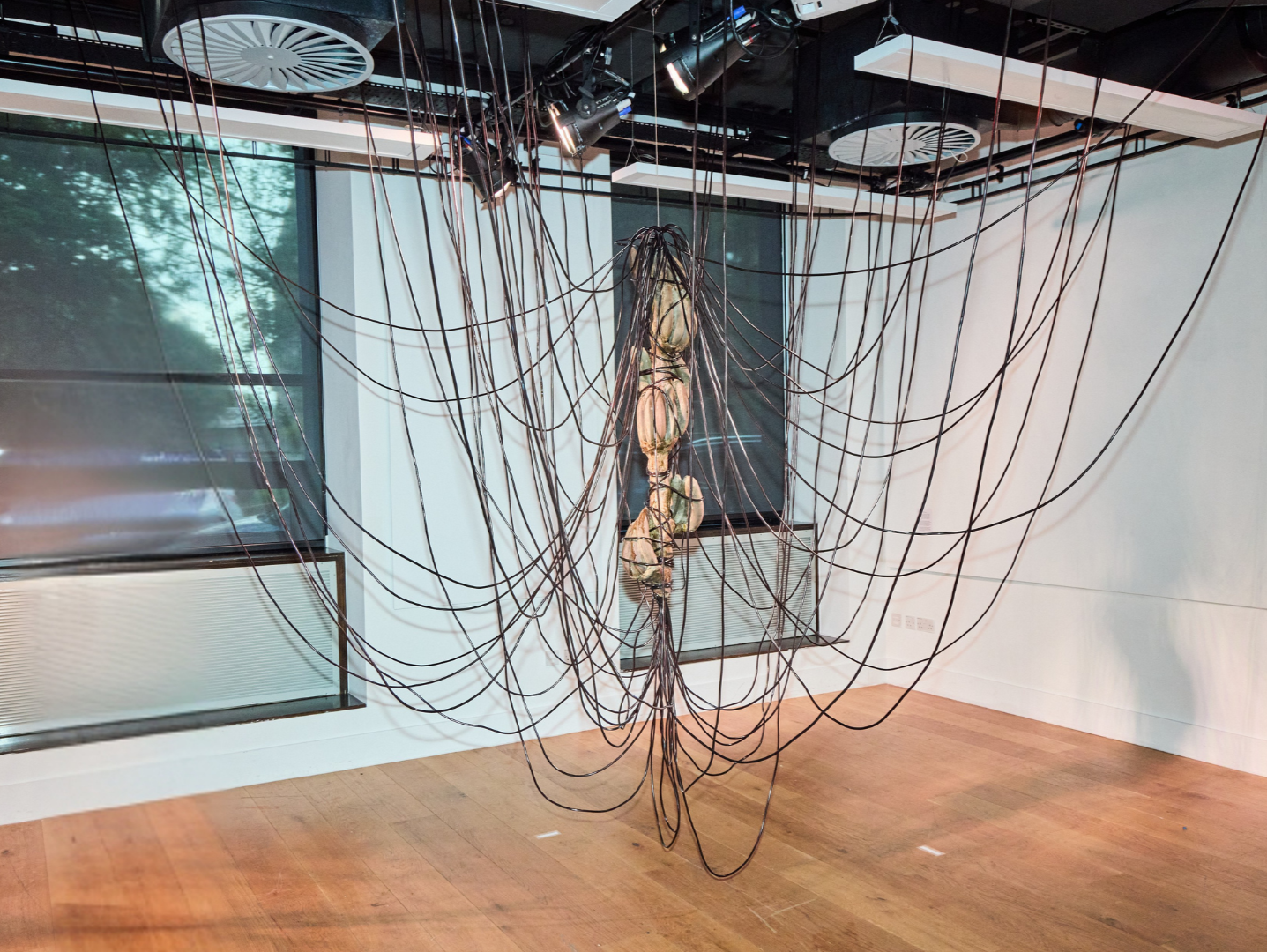
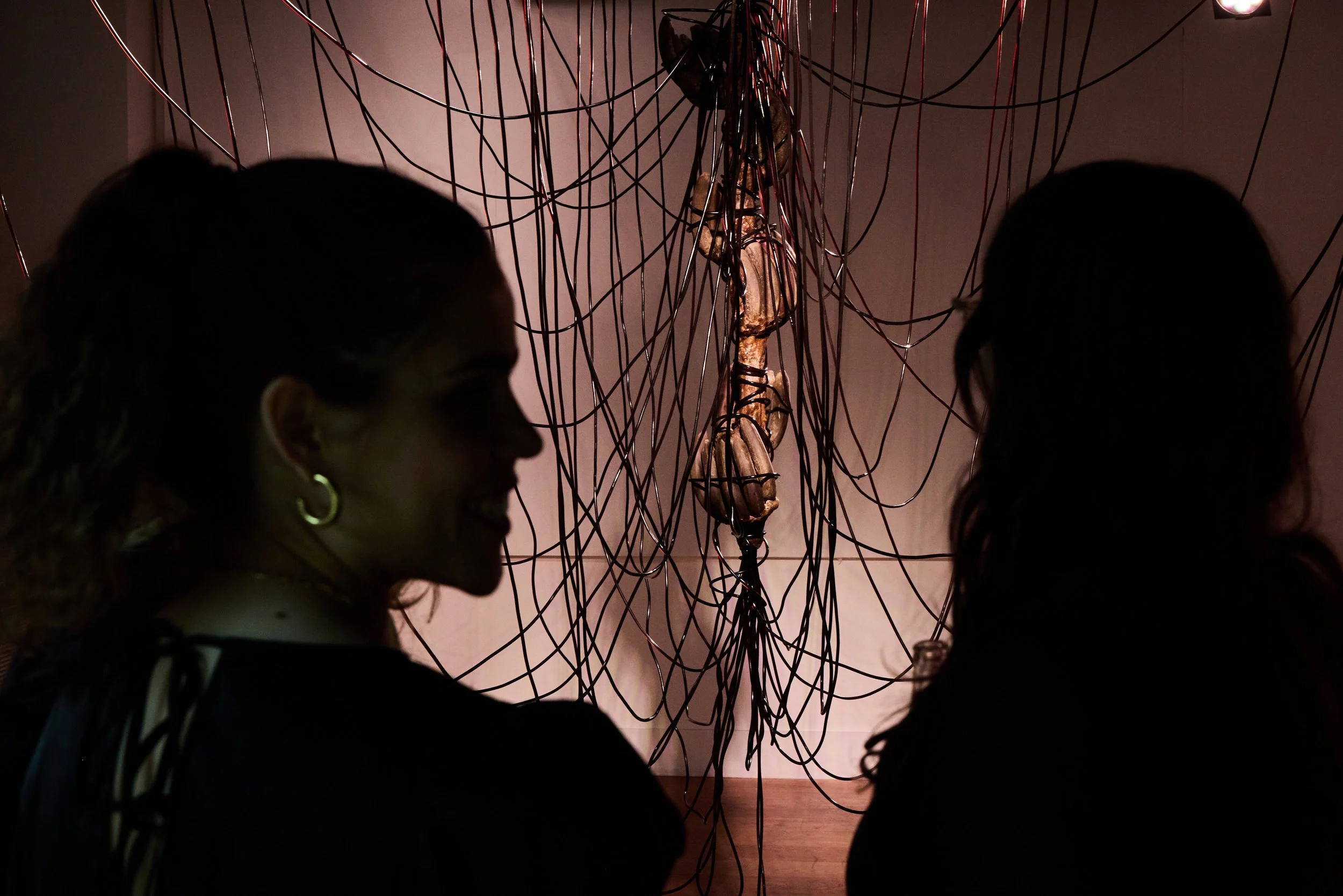
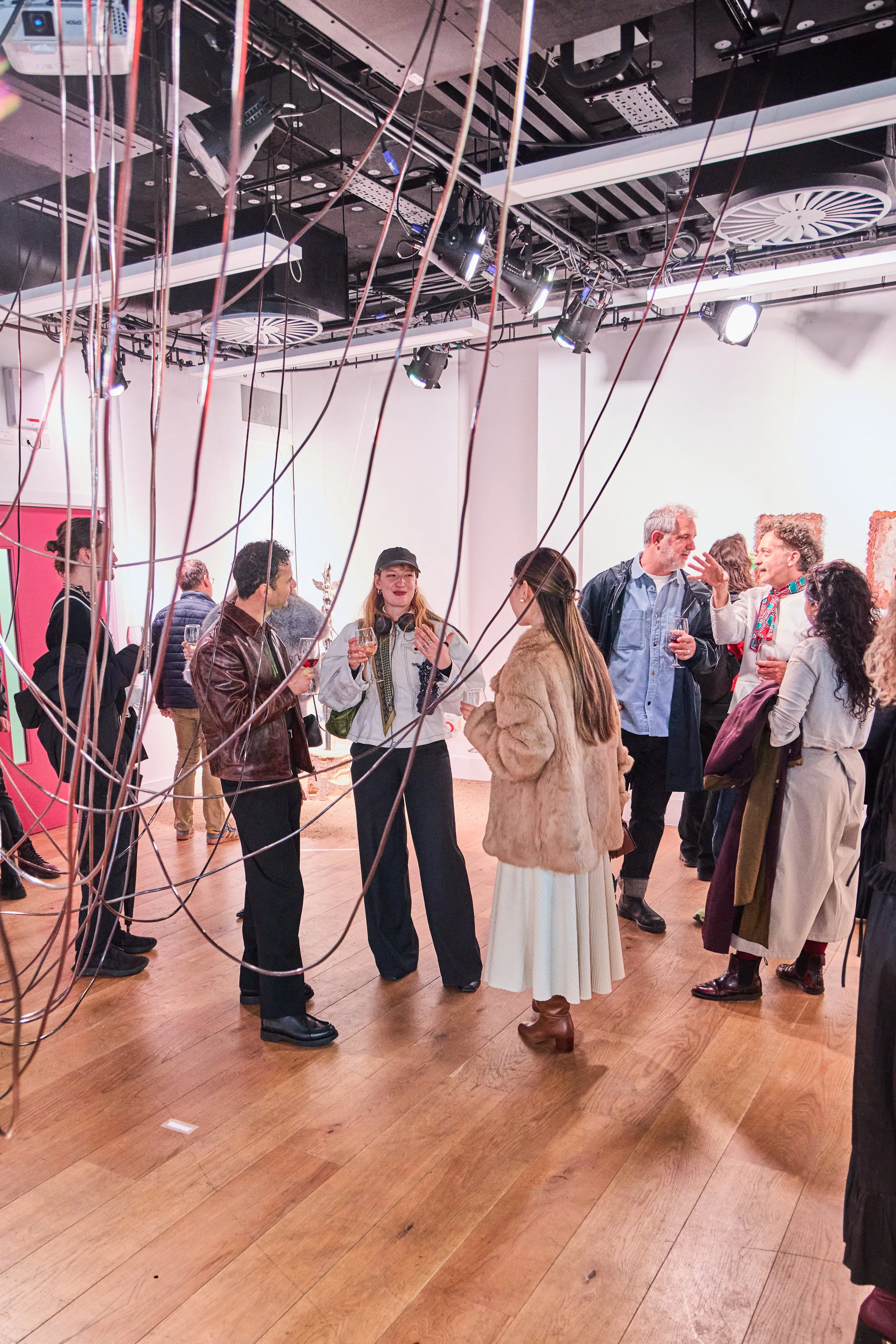
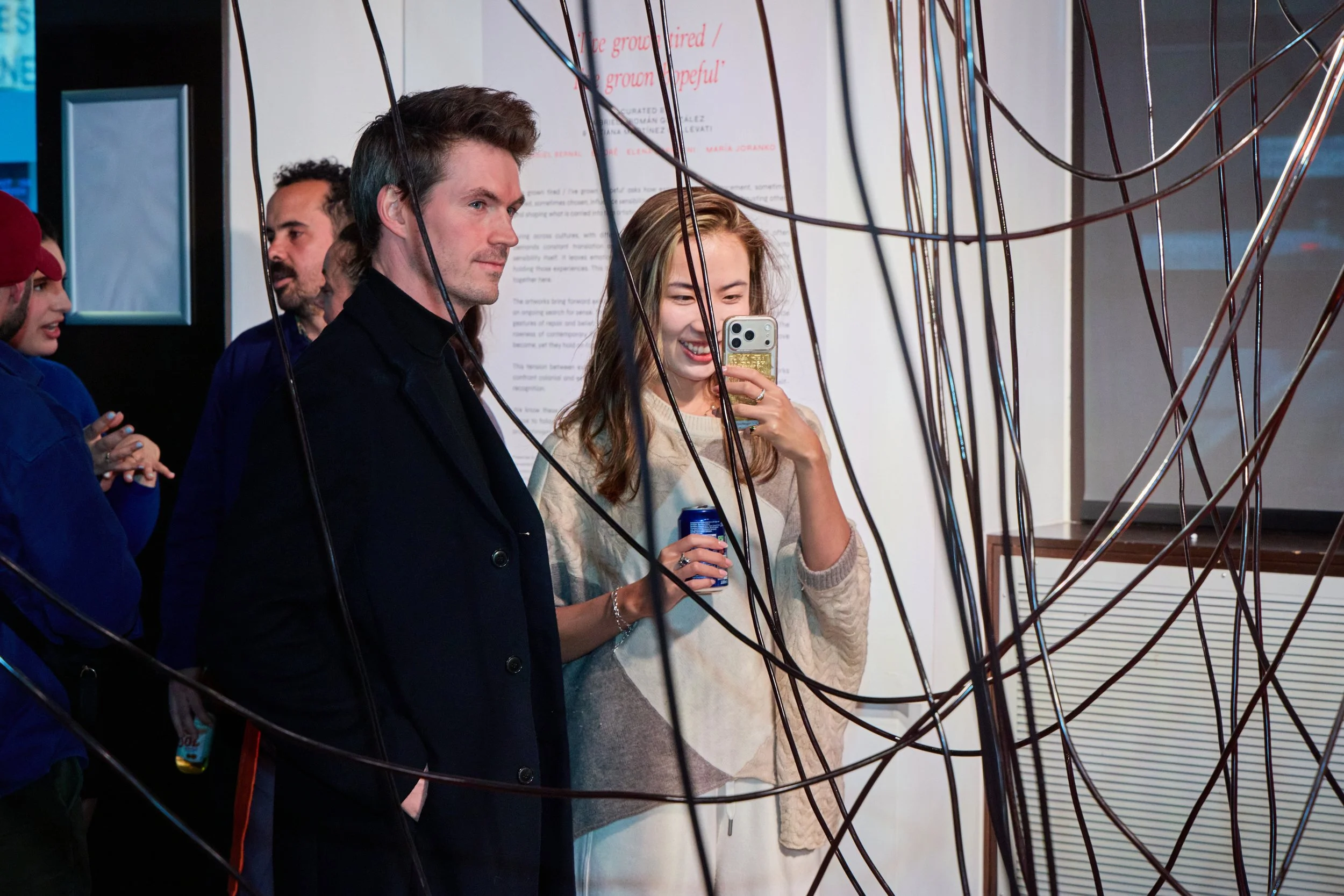
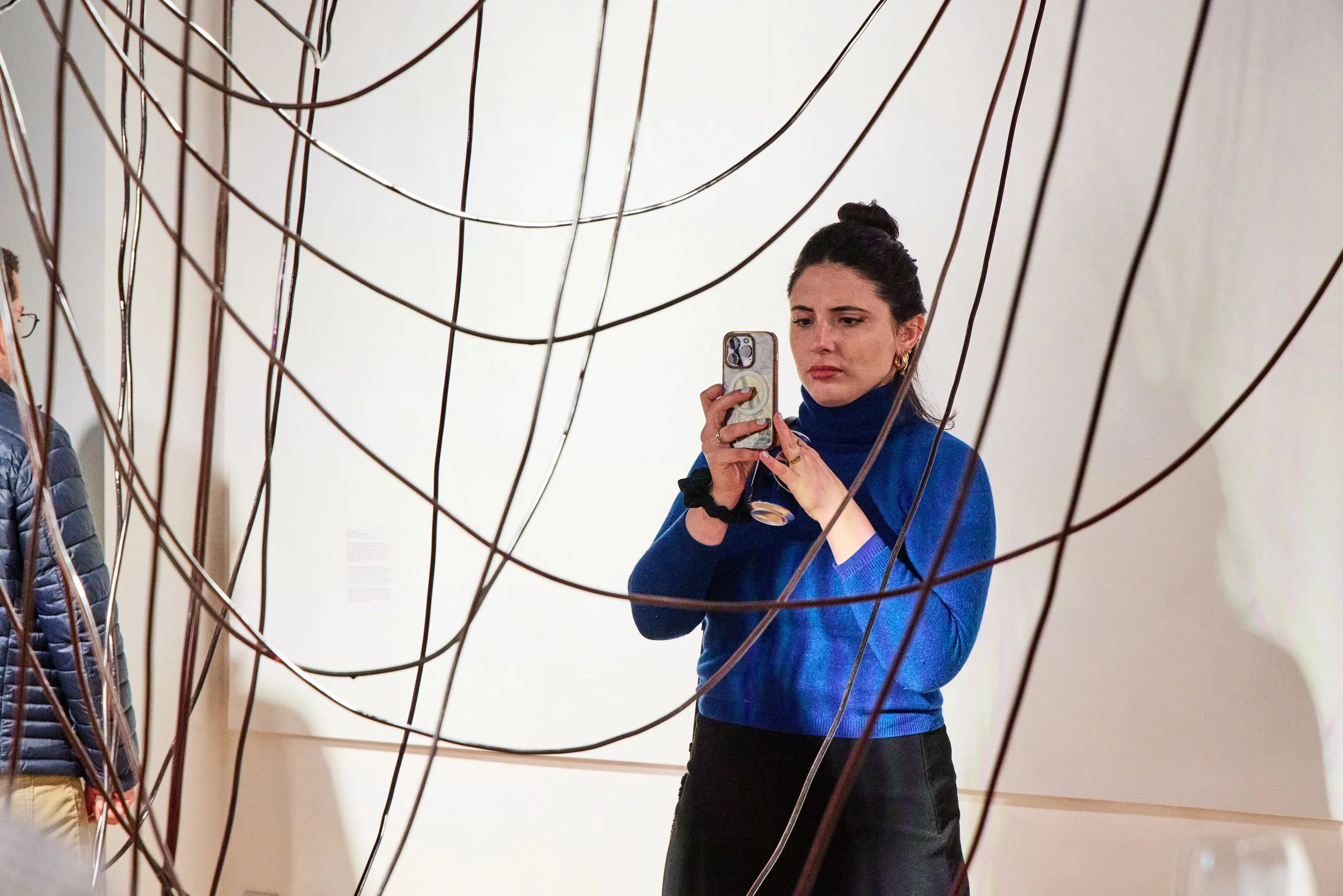
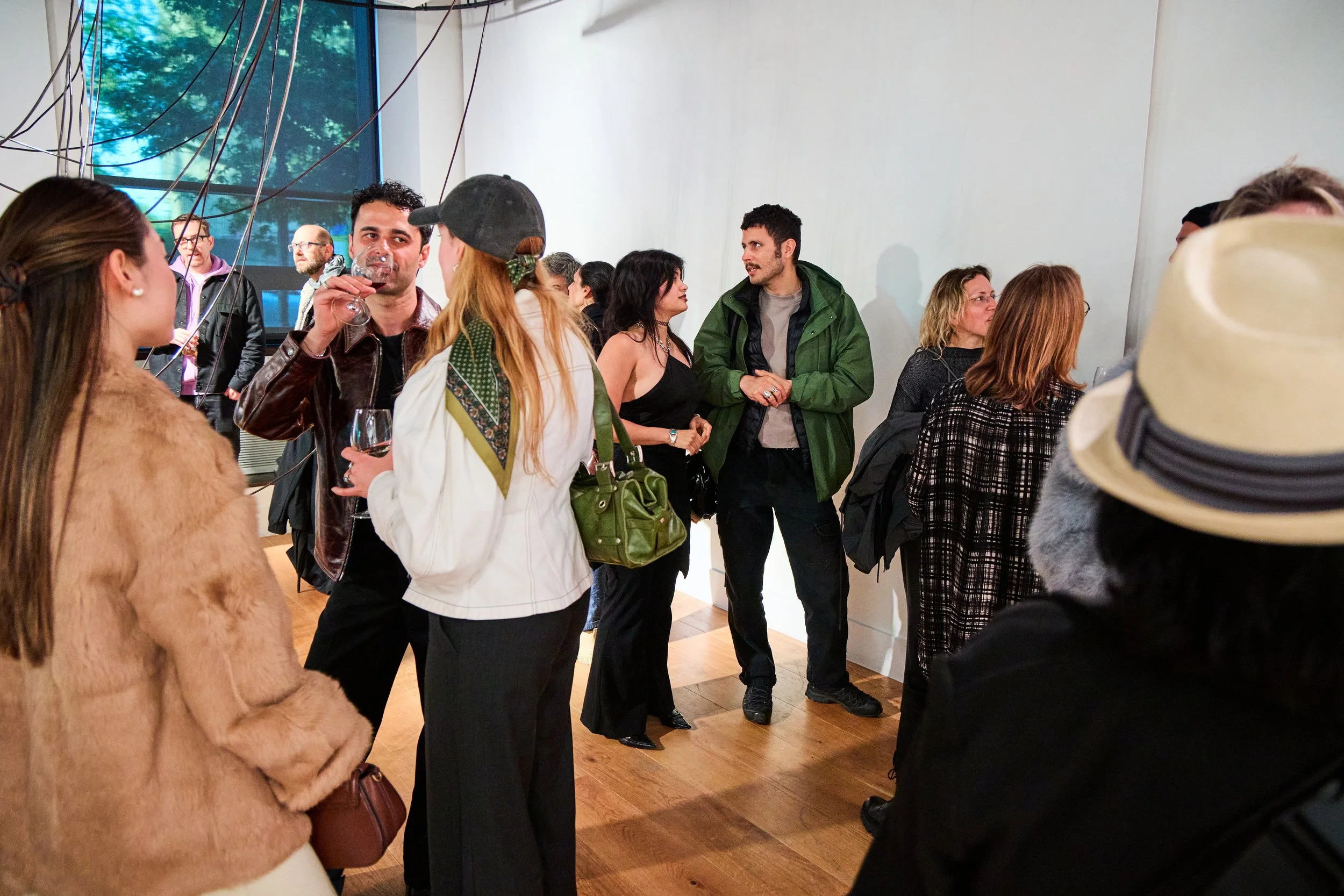
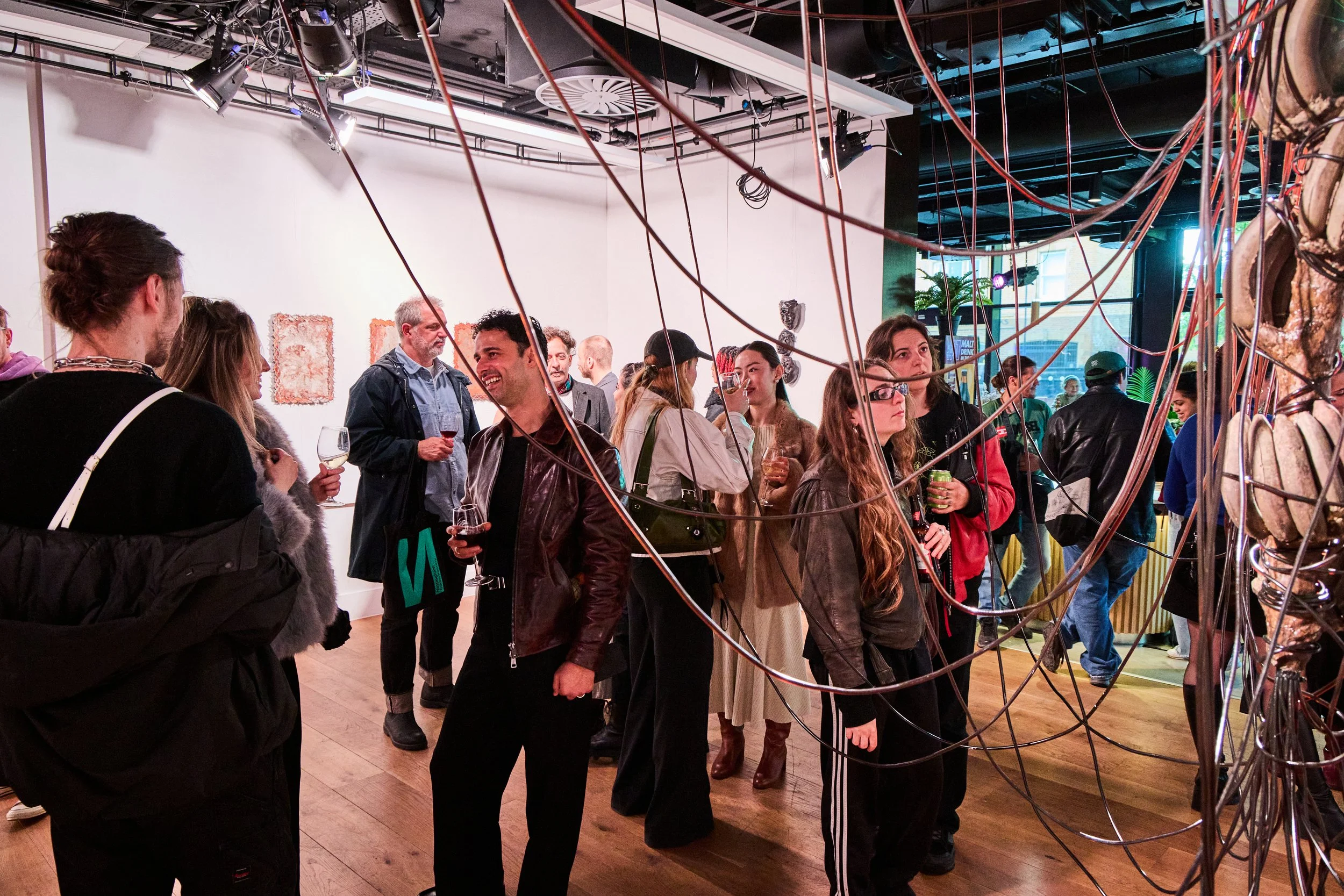
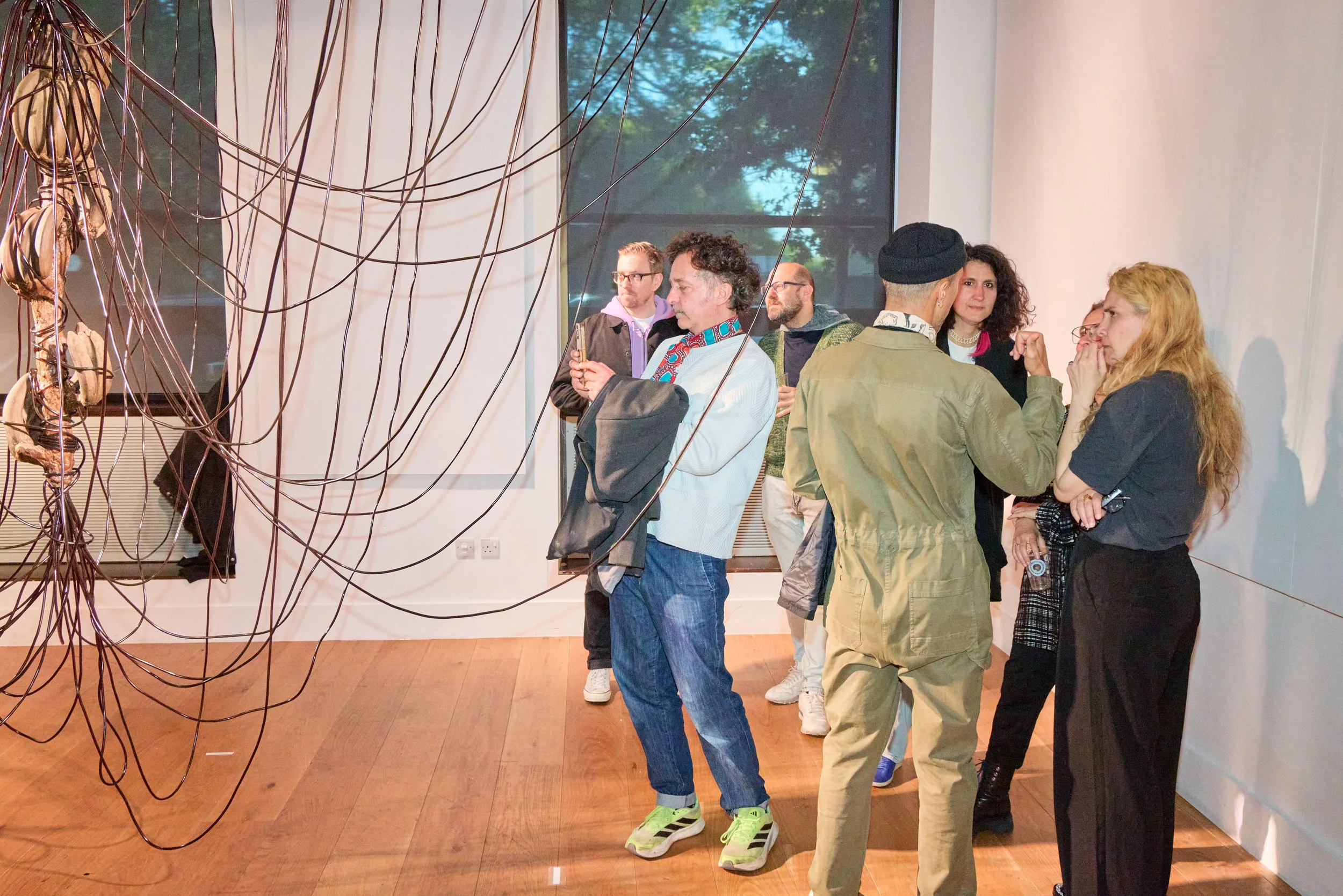
Daniel Bernal, Patria (Fluid Roots) | Plaster, silicone pipes, burnt engine oil, 2025 - Patria is a suspended installation made from plaster forms that resemble bananas, held within a network of silicone pipes filled with burnt engine oil. The work connects two loaded materials: the banana, tied to histories of trade, labour, desire and masculinity; and engine oil, a residue of extraction, movement and industrial power. Bernal binds these references into one body. The sculpture becomes a tense organism where natural growth, economic circulation and symbolic violence are difficult to pull apart. Nothing moves, but everything appears caught in a system of pressure, dependency and repetition. Patria opens a series of questions that continue across the show: what do we inherit from the systems that shape us? What forms of life can grow from damaged structures? And what remains possible when the roots themselves are unstable?
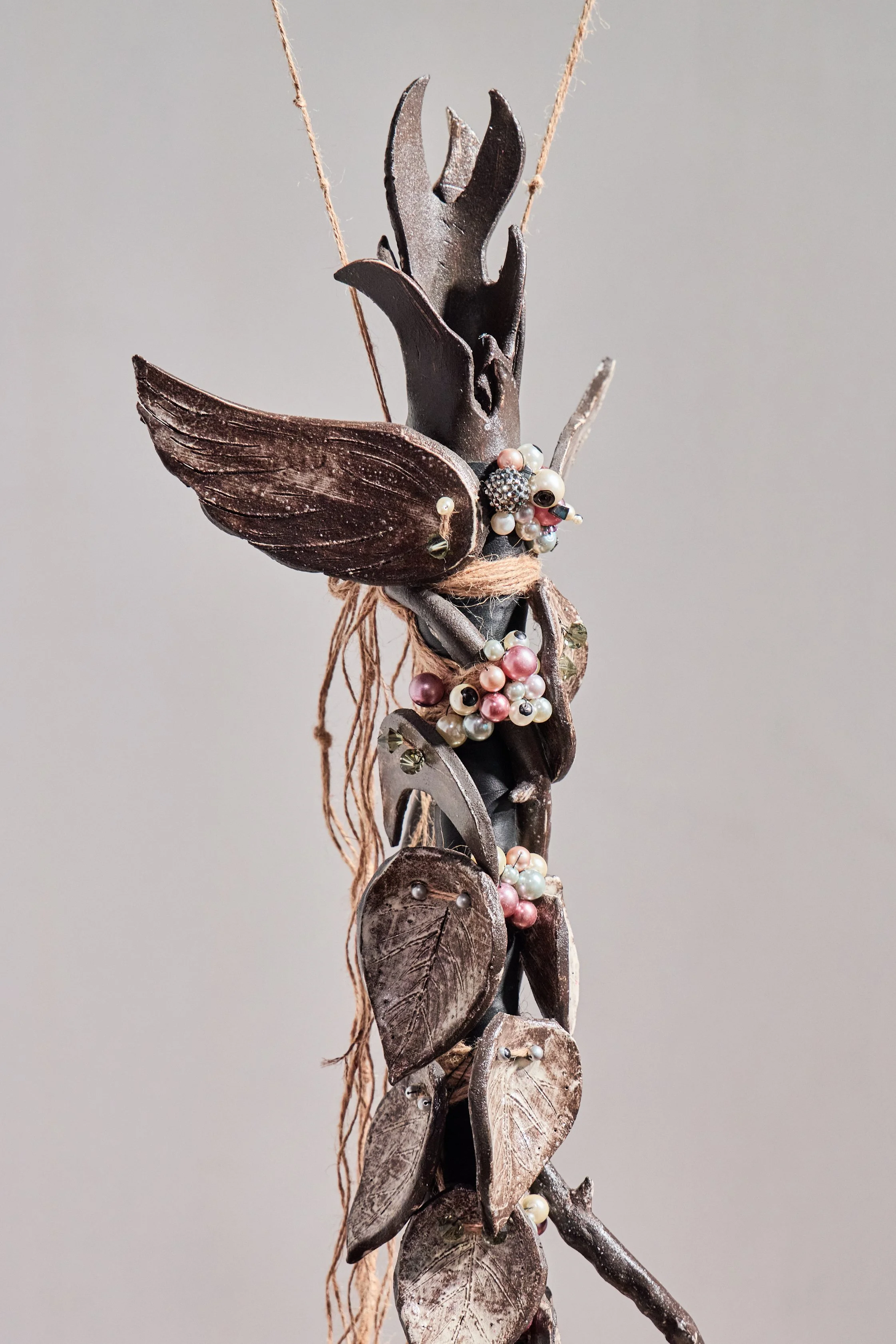
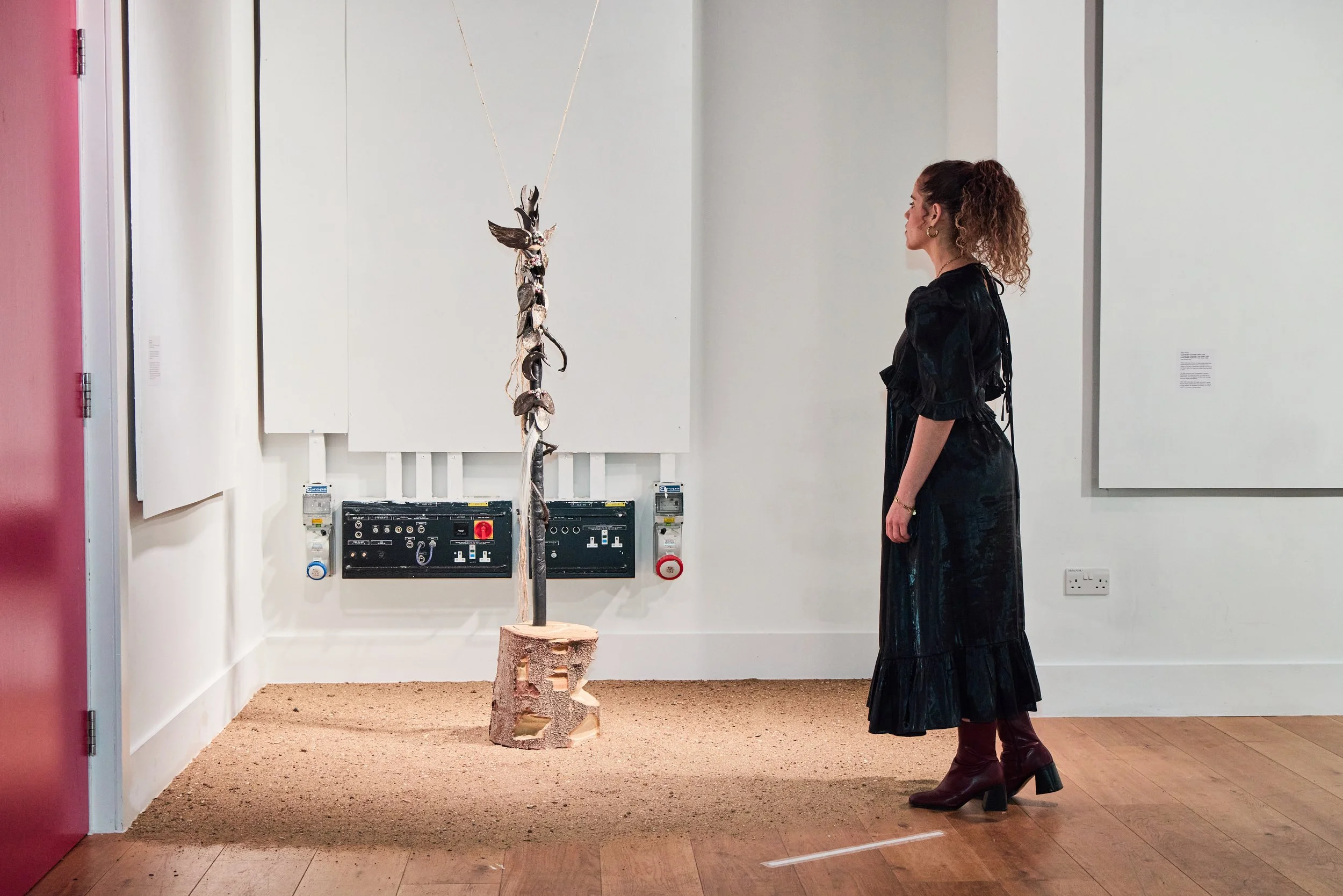
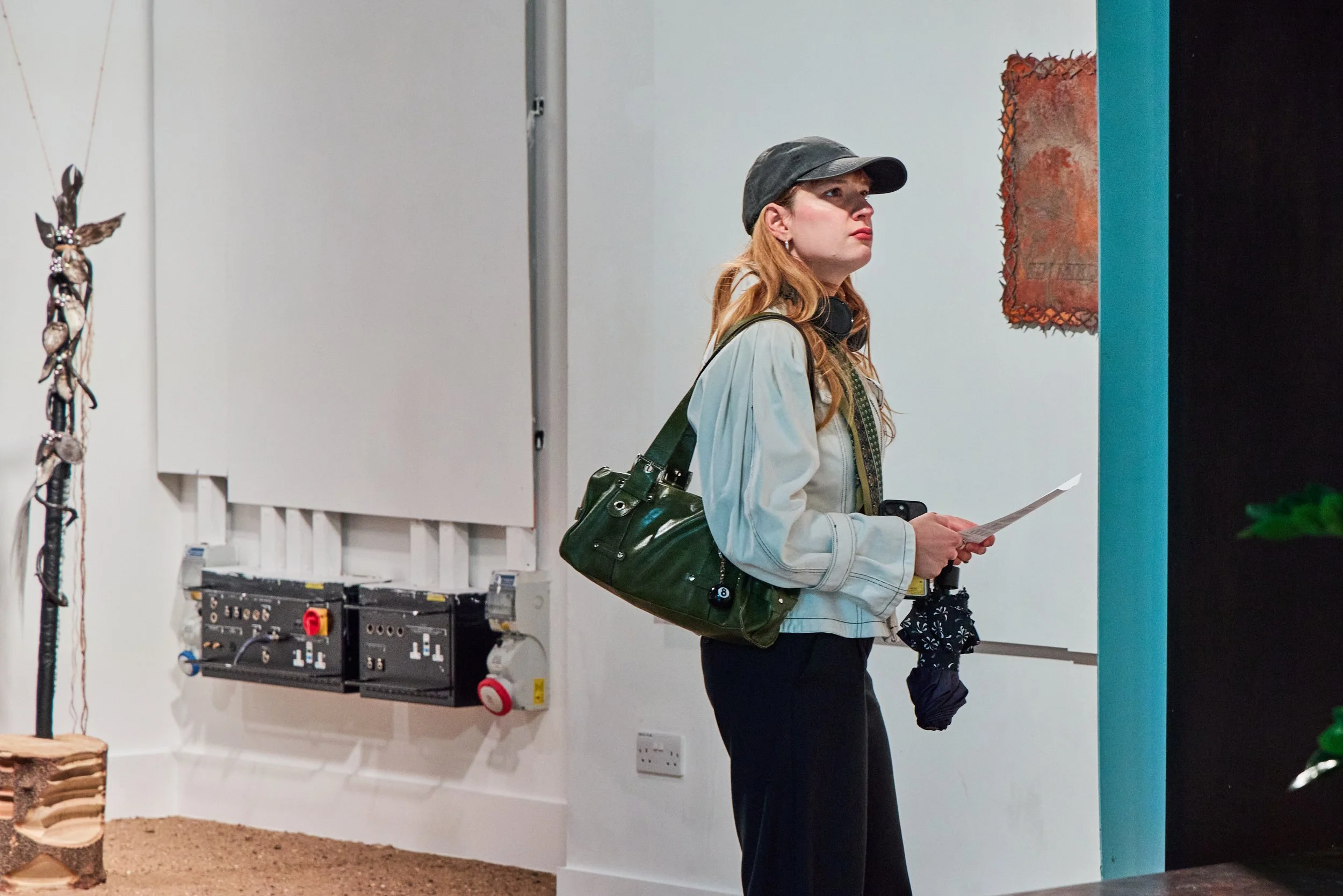
Elena Saraceni Sigilaria | Wood, black clay, white slip, quilted leather, embroidery, acrylic fibre, found objects, 2026 - The title Sigilaria refers to small figurines historically exchanged during the Roman festival of Saturnalia: modest objects offered as symbolic substitutes of something larger. Saraceni expands this idea into a suspended structure composed of hand-built elements that resemble leaves, eyes, thorns and wings. Through gestures of tying, protecting and holding, the work carries the idea of offering as a way of keeping belief alive in a more intuitive, almost pagan sense. The piece almost suggests something between a tool, an amulet and a body, without settling into any one of them.
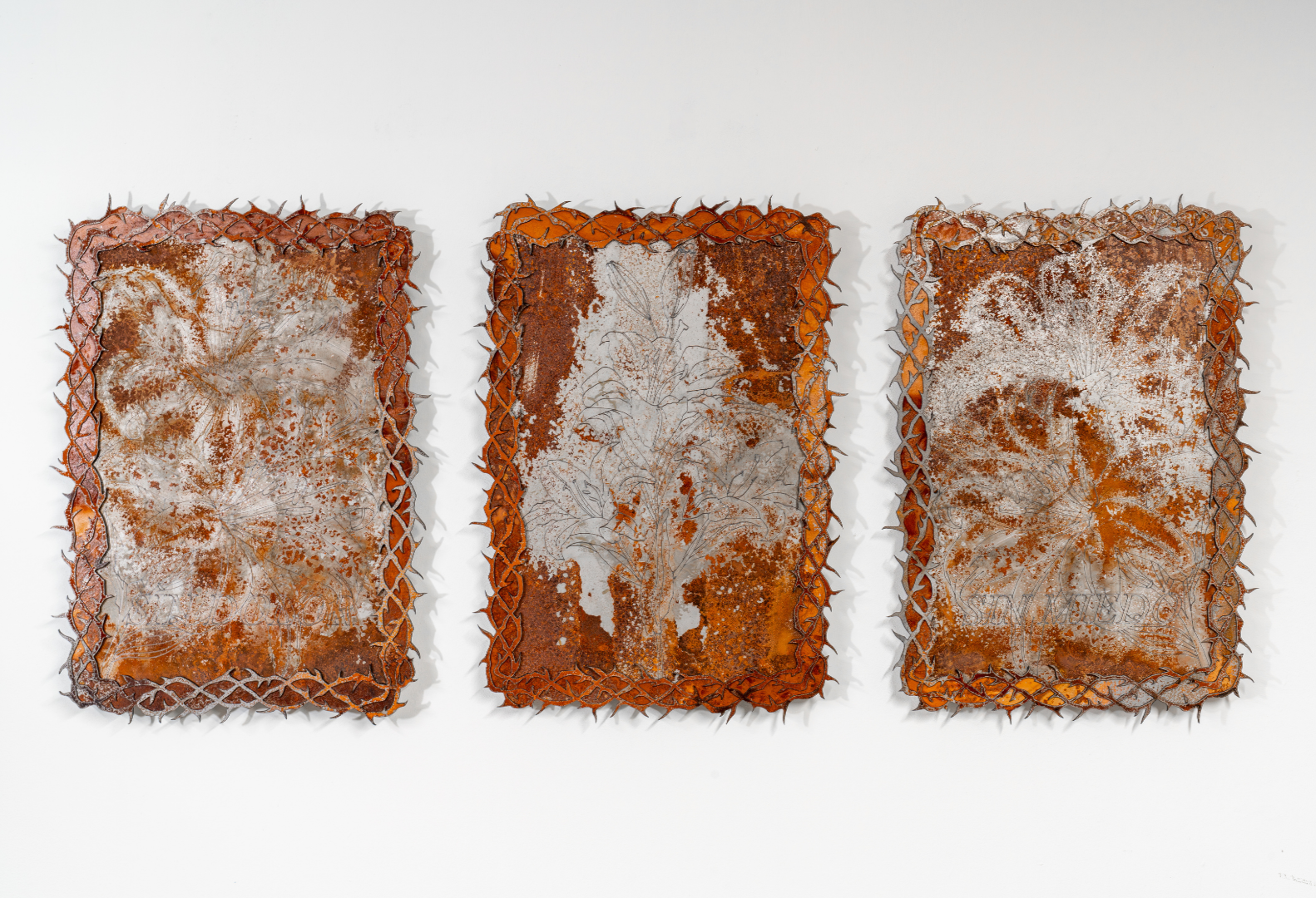
María Joranko, in the gardens of paradise (lillies) | 2026; in the gardens of paradise 2 (sin miedo) | 2026, in the gardens of paradise 3 (sin dolor) | Laser-etched steel, 2026 - These works take the form of metal panels where lilies appear engraved beneath layers of oxidation. The surface is not fixed: it continues to change over time, as rust slowly alters the image and partially obscures what is drawn. The titles introduce a set of propositions: paradise, fearlessness, the absence of pain: but these are not stable states. They sit against a surface that corrodes, shifts and resists permanence. Lillies, often associated with death and rebirth, appear here as fragile outlines rather than solid forms. They do not fully emerge, nor disappear completely, but remain caught in a process of transformation.
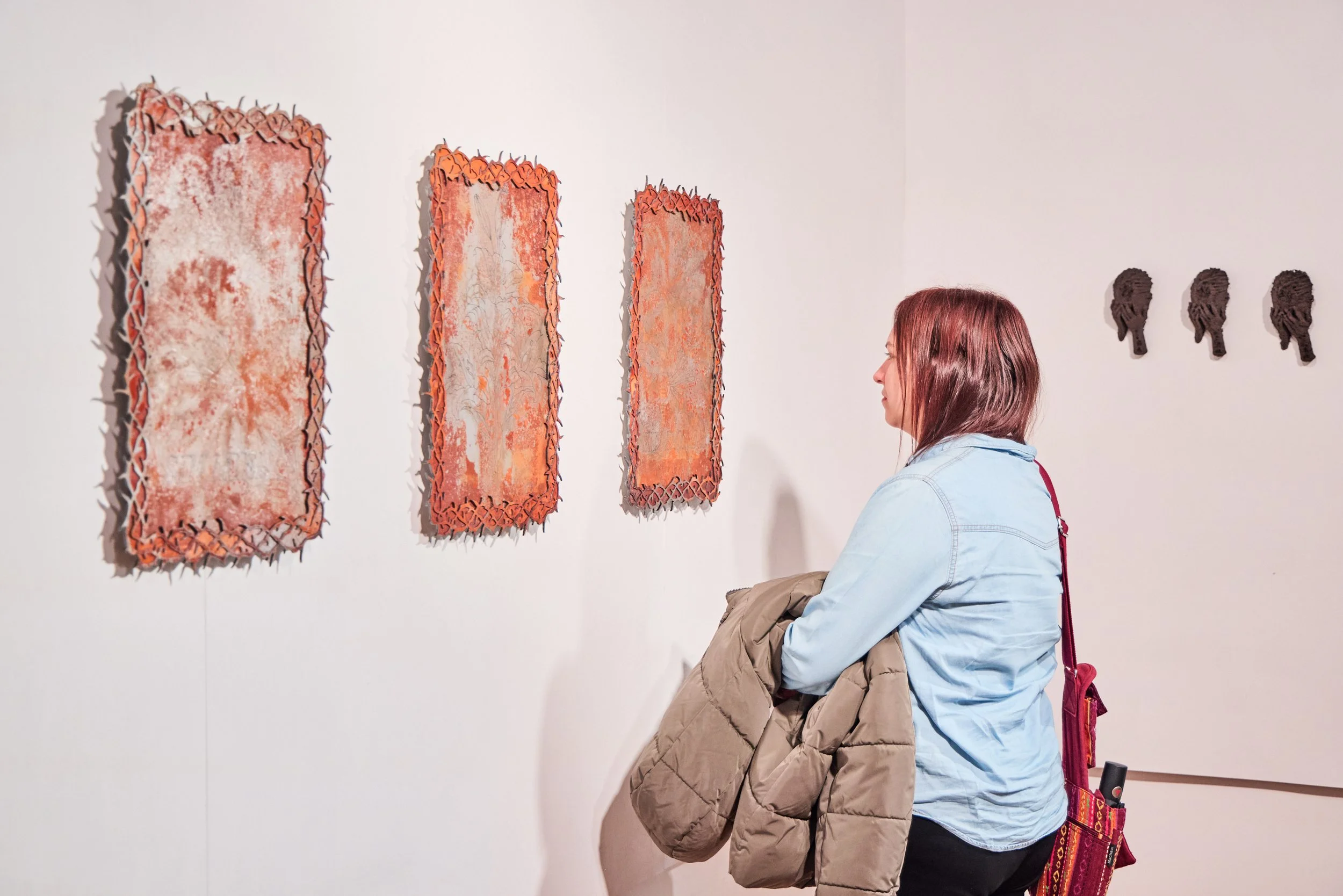
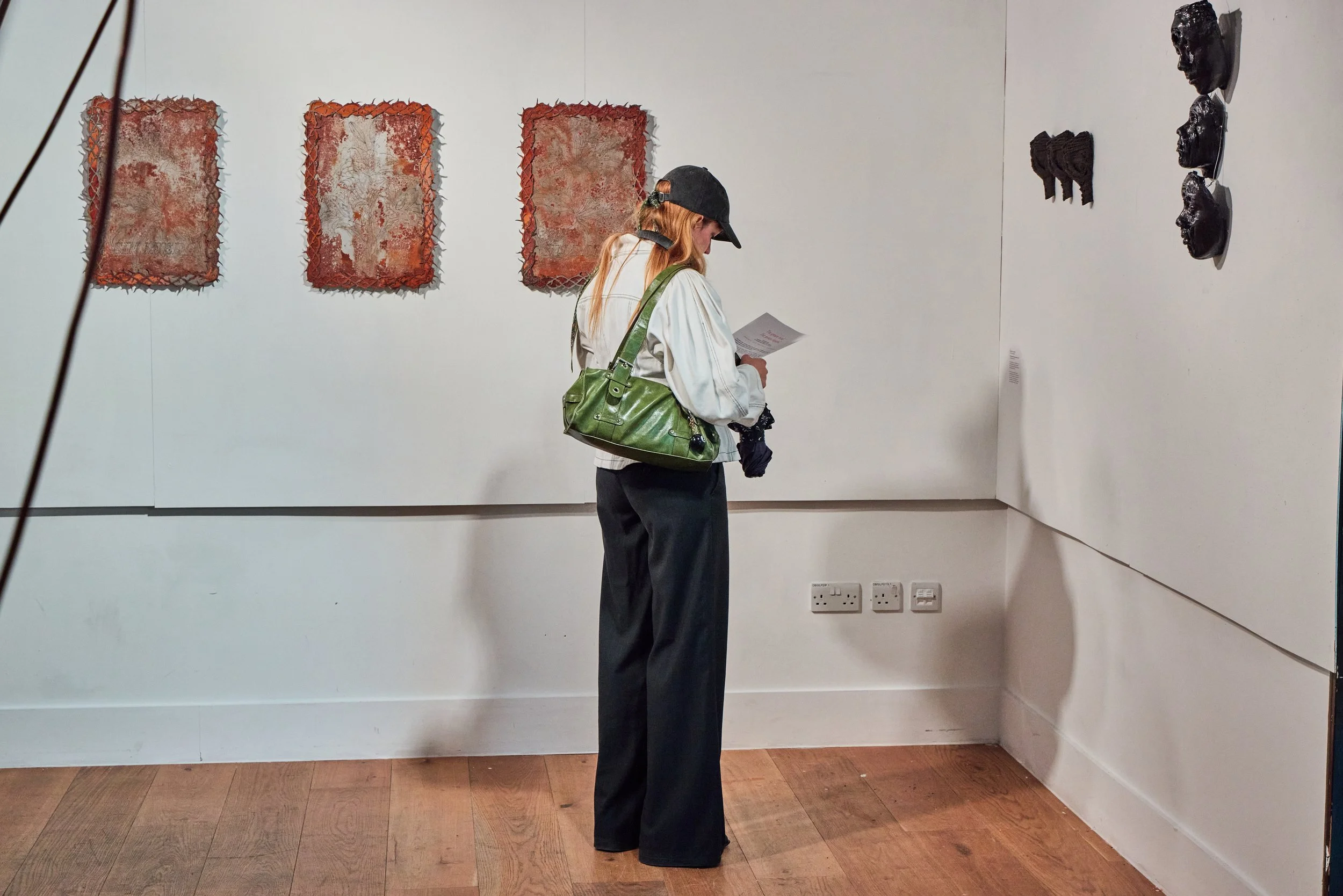
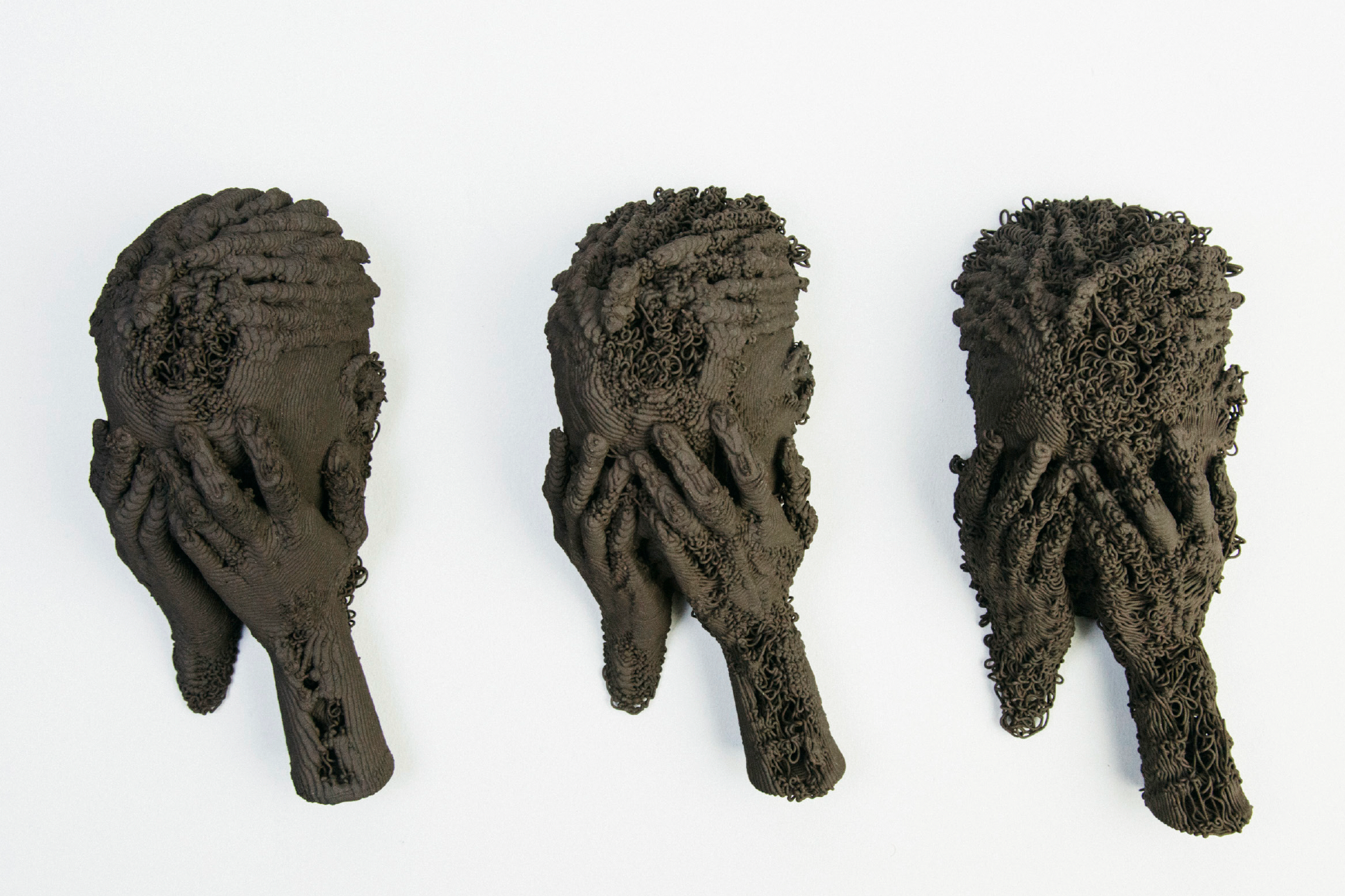
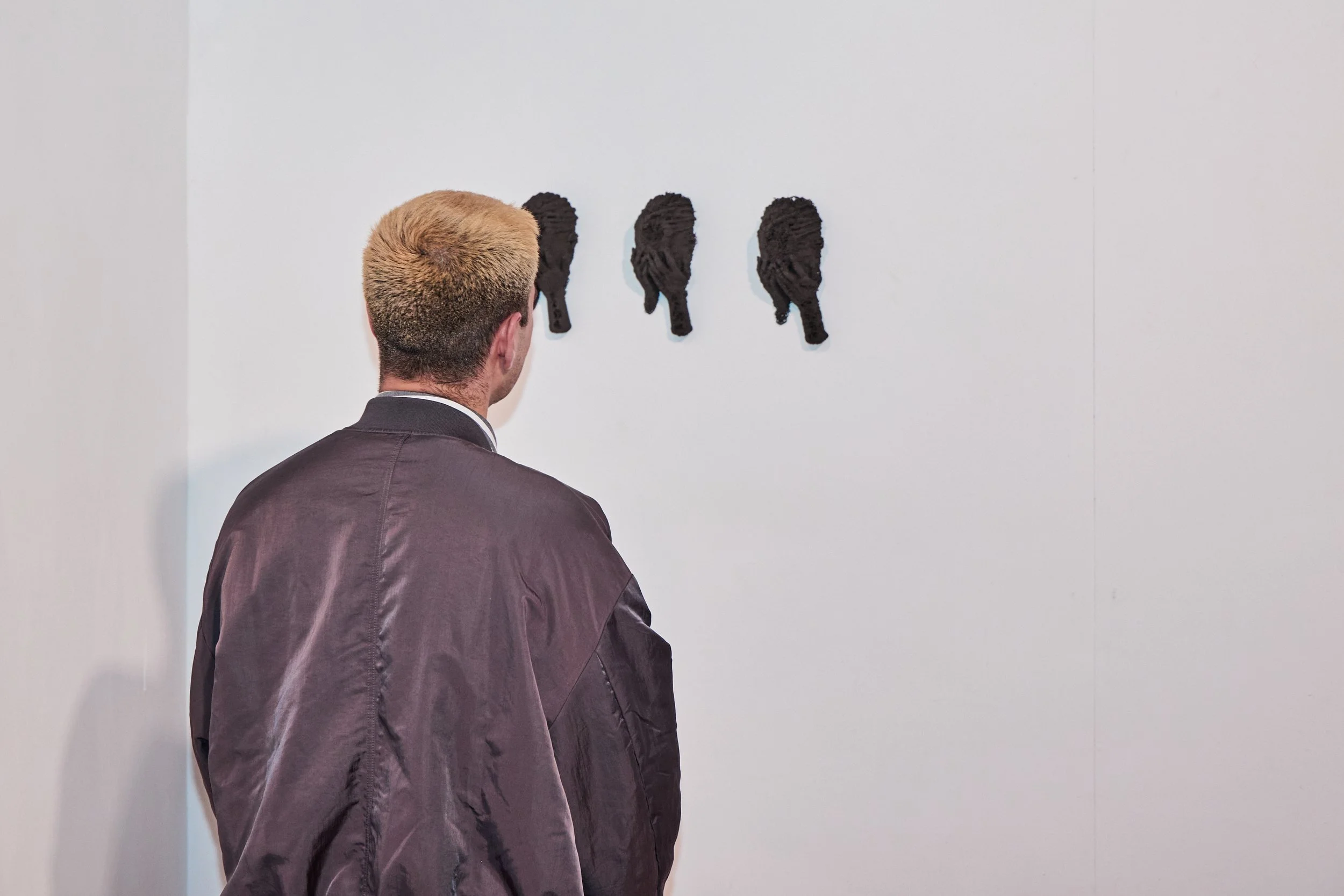
enorê, Self-iteration in 3 steps | High-fired stoneware ceramic, 2024 - These works begin with scans of the artist’s own body, translated between digital data and clay. Rather than producing stable copies, each iteration introduces shifts, distortions and breaks in the form. The body appears in process: repeated, fragmented, suspended. It does not fully hold its form as it moves between systems. In Self-iteration in 3 steps, a single model is repeated three times, but never matches itself.
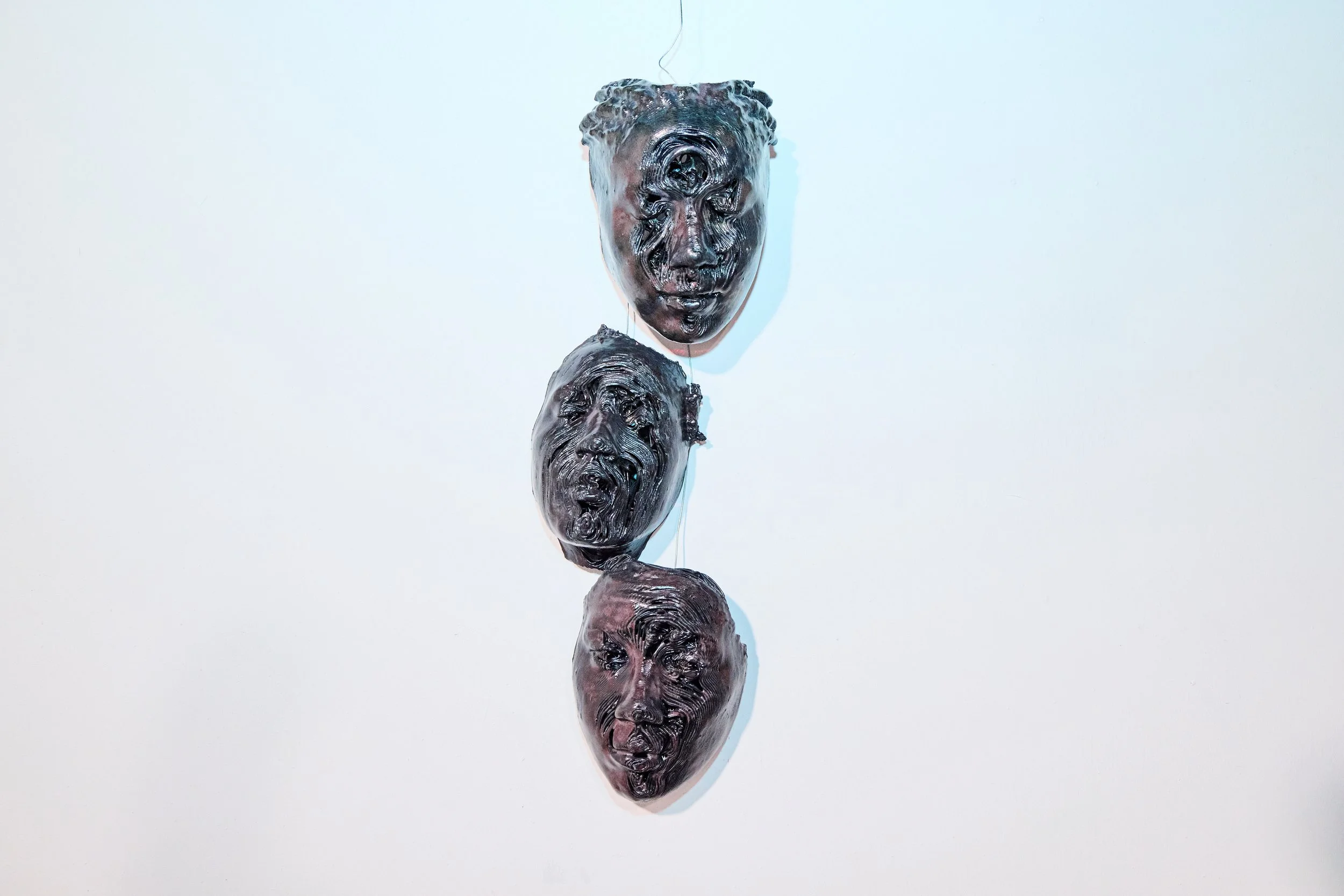
enorê, Untitled (aparição), from body reconstructions | Glazed stoneware ceramic, wire, 2025 - These works begin with scans of the artist’s own body, translated between digital data and clay. Rather than producing stable copies, each iteration introduces shifts, distortions and breaks in the form. The body appears in process: repeated, fragmented, suspended. It does not fully hold its form as it moves between systems. In Untitled (aparição), fragments of the face emerge without settling into a fixed image.